
The #TinyTax: A Simpler, Fairer Tax System for the Modern Economy
For more than a century, the United States has taxed income — the wages we earn, the savings we build, and the investments we make. But the modern...
4 min read
Mark Scheffler
:
Updated on March 15, 2026
For more than a century, American farmers have fed the world. In the decades ahead, they can do something just as transformative: power the world’s transition to renewable energy and materials.
Agriculture sits at the center of one of the greatest economic opportunities of the 21st century. By creating the world’s largest renewable biomass market, the United States can transform crops grown in places like Northeast Wisconsin into the building blocks of the modern economy—powering AI datacenters, fueling airplanes, replacing petroleum-based plastics, supplying advanced manufacturing, and producing the next generation of pharmaceuticals.
This isn’t just an environmental idea. It’s an economic development strategy for rural America—one that aligns perfectly with a prosperity economy built on innovation, sustainability, and long-term growth.
Today, most of the materials that power the modern economy come from fossil fuels:
But many of these products can be produced from renewable biomass grown on American farms.

Farmers already produce the raw materials needed to supply a wide range of industries:
| Crop | Uses |
|---|---|
|
Corn, soybeans, switchgrass
|
Sustainable aviation fuel
|
|
Oilseed Crops
|
Renewable diesel and lubricants
|
|
Agricultural Residues
|
Bioplastics and polymers
|
|
Cellulosic Biomass
|
Industrial Chemicals
|
|
Industrial Hemp
|
Electricity, paper products, corrugated fiberboard, specialty textiles
|
|
Specialty Crops |
Pharmaceutical Inputs
|
|
Crop Waste and Manure
|
Renewable Natural Gas (RNG)
|
Instead of simply selling crops into commodity markets, farmers could participate in multiple high-value supply chains simultaneously. One acre could produce food, fuel, and industrial materials.
Farmers face an economic challenge that policymakers rarely address: volatile commodity prices.
When global crop prices fall, rural economies suffer. But if agriculture becomes the feedstock for multiple industries, farmers gain access to new revenue streams that stabilize farm income.
Instead of relying on a single commodity market, farmers would participate in diversified industrial markets.
That means:
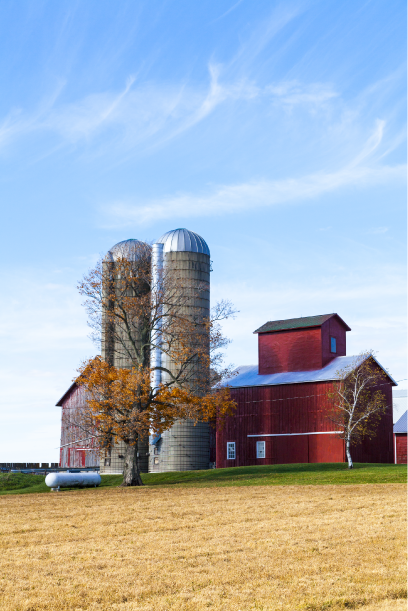
Wisconsin’s farmers produce a wide variety of crops and agricultural inputs that could supply bio-based industries.
The region already has a strong industrial base capable of producing advanced materials, fuels, and chemicals.
Ports, rail, and highways connect the region to national and global markets.
"By linking these strengths together, we can create regional bio-manufacturing hubs that turn farm products into high-value industrial goods."
A renewable biomass market would unlock an entire ecosystem of new products and industries.
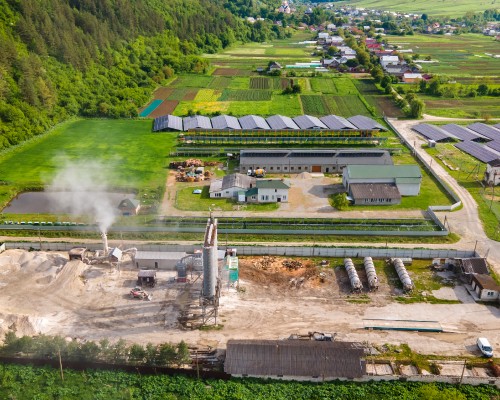
Biomass electricity is generated by using renewable organic materials from farms and forests, like industrial hemp, corn stalks, wood waste, or manure, to produce heat or gas that drives turbines and generates electricity.
Renewable diesel made from oilseed crops is already expanding rapidly.
Oil crops grown in Wisconsin and across the Midwest can become clean-burning diesel fuel for trucking and shipping.
Airlines around the world are under pressure to reduce carbon emissions. Next-gen lightweight composites paired with sustainable aviation fuel (SAF) could enhance an already strong NE Wisconsin aviation sector.
Petroleum-based plastics are increasingly being replaced with bio-based polymers made from agricultural materials.
These materials are used in packaging, automotive parts, consumer goods and medical equipment.
Plant-based lubricants are safer, biodegradable, and increasingly used in manufacturing and heavy equipment.
Many modern medicines rely on complex biological compounds that can be produced through agricultural biotechnology.
Future crops could become the raw materials for pharmaceutical manufacturing.
The goal is not for government to run agriculture. The goal is to help create markets—just as federal policy helped build the agricultural economy we have today.
Major industries need predictable supply chains.
The federal government—particularly the Department of Defense and federal aviation programs—could provide long-term purchase contracts for:
This helps scale new markets quickly.
America’s national laboratories and land-grant universities are already leaders in agricultural science.
Expanding research funding through the USDA, national laboratories, and university research partnerships would accelerate development of:
Farmers often lack direct connections to large industrial customers.
Federal programs can help build bio-manufacturing and electrical generation supply chains that connect:
This creates regional economic clusters built around agriculture.
The United States still spends hundreds of billions of dollars every year importing fossil fuels. By expanding renewable biomass markets, American agriculture can help power the nation’s energy future.
Farmers could become:
This strengthens national security while creating opportunity across rural America.
My vision for a prosperity economy is simple:
Economic growth should improve the lives of everyday Americans while protecting the resources future generations depend on. Renewable biomass markets do exactly that.
They:
And most importantly, they give rural communities a central role in America’s economic future.
Farmers Powered the 20th Century.
They Can Power the 21st.
This isn’t left or right—it’s rural America leading the next industrial revolution.
• Energy independence – Producing fuel and energy from American farms reduces dependence on foreign oil.
• Stronger farm markets – New demand for crops creates additional income streams for farmers.
• Private-sector innovation – Expands opportunities for American manufacturing, chemical companies, and energy producers.
• National security – Domestic biofuels strengthen the resilience of military and aviation fuel supplies.
• Rural economic development – Biofuel refineries and bio-manufacturing plants create jobs in rural communities.
• Market-driven solutions – Agriculture competes in new global markets without relying solely on subsidies.
• Supports American industry – Bio-based materials can replace imported petrochemicals.
• Entrepreneurship opportunities – New industries create space for small businesses and local processing facilities.
Climate solutions – Biofuels and bio-based materials can significantly reduce carbon emissions.
• Renewable energy expansion – Biomass complements solar and wind in a diversified clean-energy grid.
• Sustainable agriculture – Encourages regenerative farming practices and better soil health.
• Reduced plastic pollution – Bio-based plastics can replace petroleum-based plastics.
• Circular economy – Agricultural waste and residues are reused instead of discarded.
• Green job creation – Bio-manufacturing creates new clean-energy jobs in rural communities.
• Lower carbon transportation fuels – Sustainable aviation fuel is one of the few viable ways to decarbonize air travel.
• Environmental stewardship – Supports a transition away from fossil fuels while strengthening rural economies.
For more than a century, the United States has taxed income — the wages we earn, the savings we build, and the investments we make. But the modern...
Environmental sustainability means safeguarding the natural beauty and resources of this District, of our nation, and of the world. From our rivers...

America has the most advanced medical technology in the world and at the same time we also have the most expensive healthcare system. Too many...